Wolf Cut for Straight Hair Men: Does It Work? (Styling, Care & Best Variations)
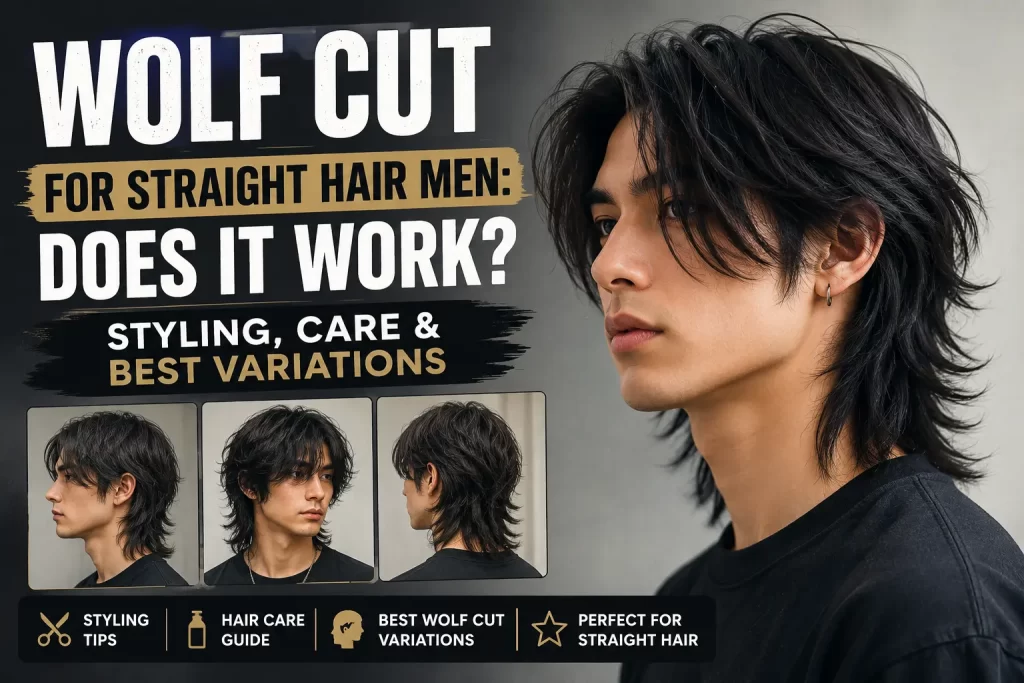
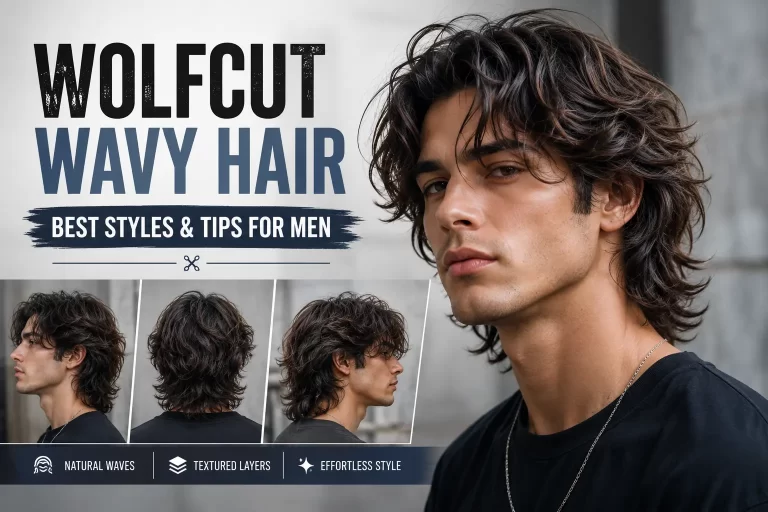
If your hair is dead straight, you’ve probably wondered whether the wolf cut is even worth it. Most of the trend’s viral moments come from guys with waves or curls doing half the styling work for them. So what happens when you take that same shaggy, mullet-inspired layering and put it on hair that has zero natural bend?
Short answer: it works — but it behaves differently, and it needs a slightly different approach than the version you’ve seen all over TikTok. Here’s what actually changes when you put a wolf cut on straight hair, and how to get it right.
(New to the style in general? Start with our full wolf cut guide for the basics — this article picks up where that one leaves off.)
Does a Wolf Cut Actually Work on Straight Hair?
Yes — and honestly, straight hair is one of the more interesting canvases for it. Wavy and curly hair naturally disguises where one layer ends and the next begins. Straight hair doesn’t have that luxury. Every layer you cut is fully visible, all the time, with nothing to soften the transitions.
That’s not a bad thing. It just means the cut has to be done well, because there’s nowhere for a sloppy layering job to hide.
Why Straight Hair Shows Every Layer More Clearly
On textured hair, the natural movement blends layers together into one flowing shape. On straight hair, each layer reads as its own distinct line — which is exactly why a well-cut straight wolf cut can look sharper and more graphic than the textured version. The tradeoff is precision: your barber needs to nail the layering, because there’s no wave or curl to cover for an uneven cut.
Does It Make Straight Hair Look Flat?
This is the real concern, and it’s a fair one. Straight hair has less natural volume to begin with, and heavy layering can sometimes lie flatter than expected — especially at the crown. The fix isn’t avoiding the cut, it’s compensating for it: root-lifting products, an upside-down blow-dry, and layers that are cut with enough weight distribution to create lift rather than just length variation. Done right, a straight wolf cut doesn’t look flat — it looks intentional and structured, more like a shape than a mass of hair.
Does It Add Volume?
It can, but volume on straight hair from a wolf cut comes from styling, not just the cut itself. The layering removes weight, which allows for more volume potential — but straight hair won’t puff up on its own the way wavy or curly hair does after the same cut. You’ll need to actively build volume with technique (see below), not just rely on the haircut to do it for you.
Length Variations Worth Knowing
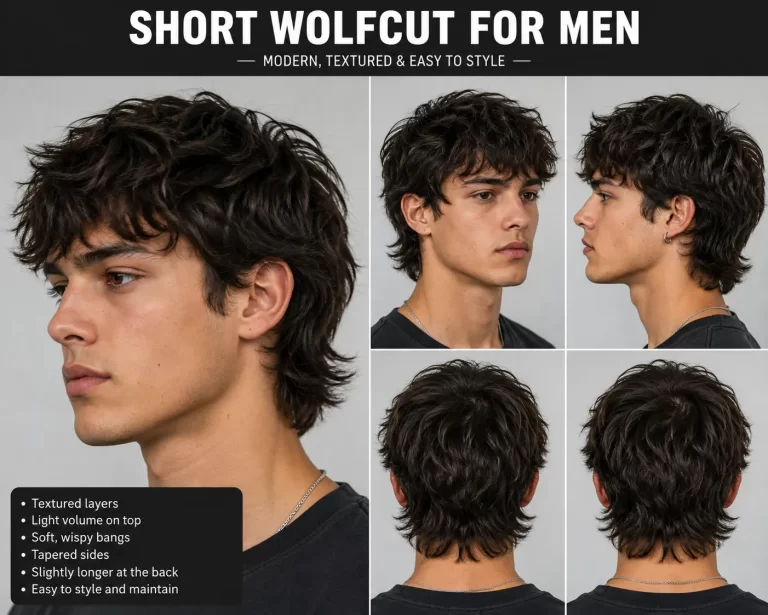
If you’re leaning toward a shorter length, we’ve already covered that in detail — our short wolf cut guide includes a dedicated short straight wolf cut breakdown with styling tips.
For long straight wolf cuts, the layering tends to look sleeker and more deliberate than on shorter lengths — think less “shag,” more “editorial.” The length gives the layers room to actually move instead of just sitting close to the head, which helps counter the flatness issue mentioned above.
Medium-length straight wolf cuts are often the easiest starting point if you’re unsure. There’s enough length for the layers to show real structure, but it’s short enough that styling only takes a few minutes and mistakes grow out fast.
Bangs on a Straight Wolf Cut
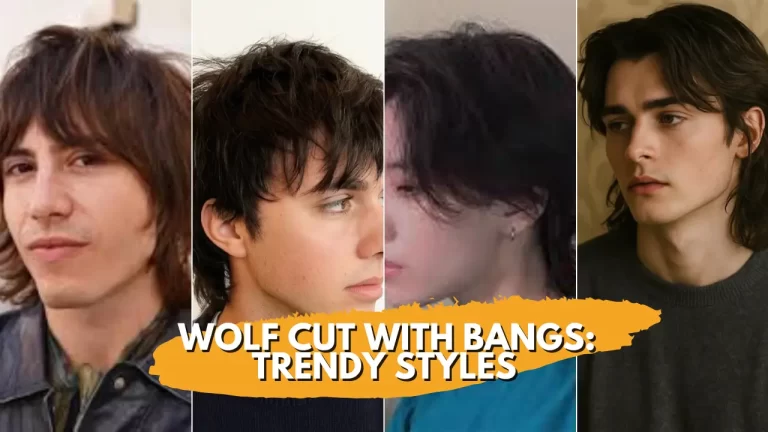
Bangs pair especially well with straight hair because there’s no wave to fight — curtain bangs in particular fall cleanly and evenly without the unpredictability you’d get on textured hair. We’ve got a full breakdown of the best options in our wolf cut with bangs guide, which covers styling for straight, wavy, and curly textures alike.
How to Style a Straight Wolf Cut (Without It Falling Flat)
The general wolf cut styling routine — wash, product, rough-dry, scrunch — still applies. What’s different on straight hair comes down to three things:
1. Dry upside down, every time. This isn’t optional the way it might be for wavy hair. Straight hair drops flat almost immediately once it’s dry, so lifting the roots while drying — not after — is what actually creates lasting volume.
2. Go lighter on product than you think. Heavy clays and pastes that look great on textured hair tend to make straight hair look greasy or weighed-down fast. A lightweight texture powder at the roots or a small amount of matte clay worked only through the ends usually reads better on straight strands.
3. Consider a slight bend, not full straightness. A wolf cut styled completely flat and sleek can look more like a standard layered haircut than a wolf cut. Rolling the ends under slightly with a round brush — even just a small bend — helps the layers read as intentional rather than accidental.
Maintenance: What’s Different on Straight Hair
Trim frequency and general upkeep are the same as any wolf cut. The one thing that’s genuinely different on straight hair: regrowth is more visible, faster.
Because there’s no natural wave to disguise a layer growing out, a straight wolf cut starts looking less defined a couple of weeks sooner than the same cut on wavy or curly hair. If you’re going the straight-wolf-cut route, budget for trims on the tighter end of the 6–8 week window rather than stretching to 10.
Wolf Cut vs. Butterfly Cut for Straight Hair
This is one comparison that actually matters more on straight hair than textured hair, and it’s not one we’ve covered elsewhere on the site.
The butterfly cut uses long, face-framing layers arranged in a soft “wing” shape, with much less contrast between the shortest and longest sections. On straight hair, it reads as smooth and blended — closer to a traditional layered cut with a bit more shape around the face.
The wolf cut goes further. The layers are shorter and choppier at the crown, with a much bigger length gap between the top and the back. On straight hair, that contrast is more visible than it would be on textured hair (see above), which makes the wolf cut read as bolder and edgier, while the butterfly cut stays more polished and versatile for conservative settings.
If you want something low-key that still adds movement to straight hair, butterfly is the safer pick. If you want the shaggier, more rock-and-roll silhouette, the wolf cut is worth the extra styling effort.
Is a Wolf Cut Worth It for Straight Hair?
If you’re willing to put in slightly more styling effort than a guy with natural texture, yes. Straight hair actually shows off the wolf cut’s layering more clearly than wavy or curly hair does — the tradeoff is that you can’t rely on natural movement to hide an average cut or lazy styling. Get a barber who layers with precision, learn the upside-down blow-dry, and go lighter on product than your instinct tells you to. Do that, and a straight wolf cut looks just as sharp — arguably sharper — than the textured versions all over your feed.
Not sure straight is even your best starting point? Our curly wolf cut guide and shaggy wolf cut guide are worth a look too if your texture isn’t fully straight — the styling logic changes quite a bit once there’s any natural wave involved.
FAQ
Is a wolf cut good for fine or thin straight hair? Yes, arguably one of the best combinations. The layers remove weight and create the illusion of thickness, but you’ll want to lean on volumizing products and an upside-down blow-dry to maximize the effect — fine straight hair won’t hold volume on its own the way thicker hair does.
Can thick straight hair get a wolf cut without looking bulky? Yes — the heavy layering is specifically what prevents thick straight hair from looking like one dense block. Ask your barber for more aggressive layer separation to remove bulk rather than just length.
Does a straight wolf cut need daily styling, or can you leave it unstyled? It can be worn unstyled, but straight hair drops flatter faster than textured hair when left alone. If you’re going for the low-effort look, at minimum rough-dry upside down after washing — skipping that step entirely is where straight wolf cuts tend to look more “flat layered cut” than “wolf cut.”
What’s the difference between a wolf cut and a butterfly cut for straight hair? The wolf cut has more dramatic contrast between short crown layers and a longer back, giving it a shaggier, edgier look on straight hair. The butterfly cut uses softer, more blended long layers with less contrast, making it a smoother, more versatile option for straight hair.