Wolfcut Mullet for Men: 25 Trendy Styles
Wolfcut Mullet for Men: 25 Trendy Styles
The wolfcut mullet is exactly what it sounds like — a hybrid hairstyle that grabs the best parts of two iconic cuts and smashes them together.
On one side, you have the wolf cut. It’s a modern, layered style with heavy volume at the crown, choppy layers all over, and that shaggy finish that took over TikTok a few years back.
On the other side, you have the mullet. It’s the classic “business in the front, party in the back” cut that never really died — and now it’s fully back in the mainstream.
Put them together and you get the wolfcut mullet — a layered, textured style with a long dramatic back and all the volume and movement of a wolf cut on top.
How the Wolf Cut and Mullet Combine Into One Hybrid?
The wolf cut brings the layers. Think heavy volume at the crown, choppy texture all over, and a shape that looks full and alive rather than flat and boring.
The mullet brings the length in the back. The nape stays long — often much longer than the sides and top — giving it that unmistakable mullet silhouette.
Together, they build a cut that’s edgier than a plain wolf cut and way more modern than a regular mullet. It has movement, shape, attitude, and a lot of versatility.
Key Visual Features That Make It Different From Both Parent Styles
Here’s what you’ll spot on a wolfcut mullet that neither parent cut has on its own:
- Heavy crown layers that build volume and height — straight from the wolf cut
- Long, extended nape that signals the mullet influence clearly
- Shaggy, textured sides that blend the top into the back naturally
- Face-framing pieces at the front that stay shorter than the back
- Soft or choppy ends depending on which version you pick
25 Best Wolfcut Mullet Hairstyles for Men
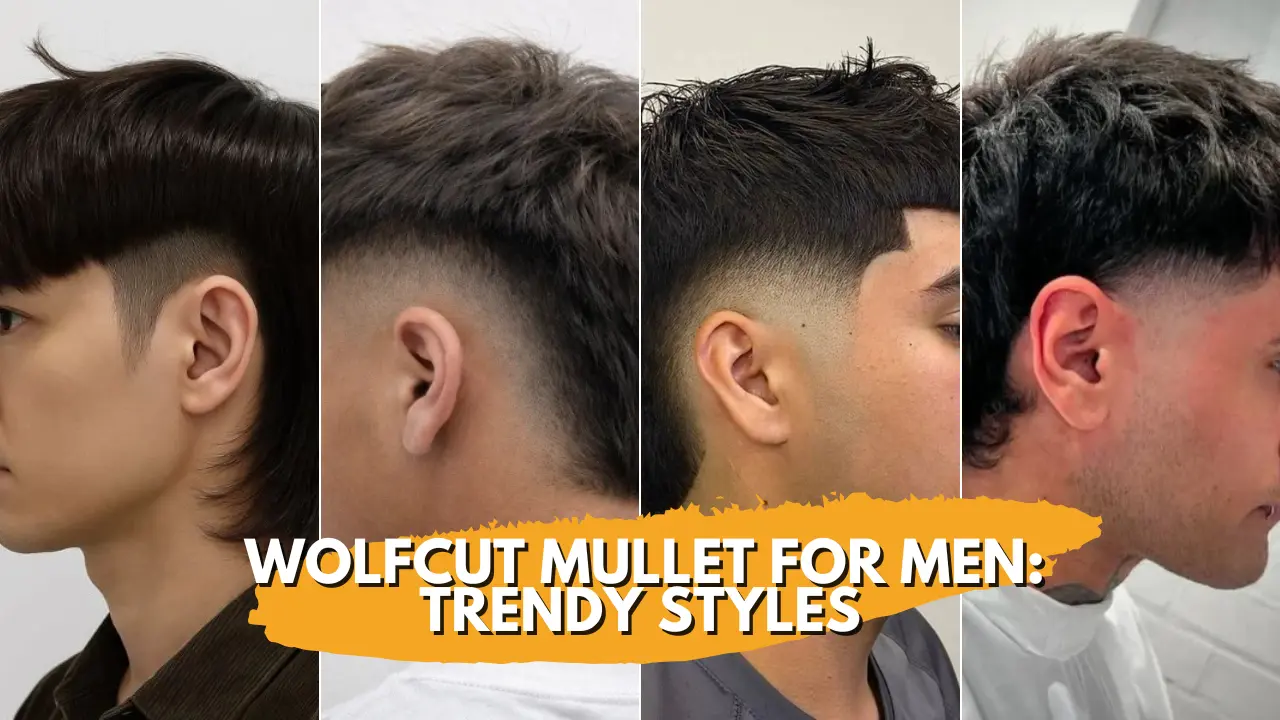
1. Classic Wolfcut Mullet
This is the one to start with. Medium-length layers on top and through the sides, heavy crown volume, and a clean mullet back that reaches the neck or below. No fade, no extra detail — just the pure hybrid shape.
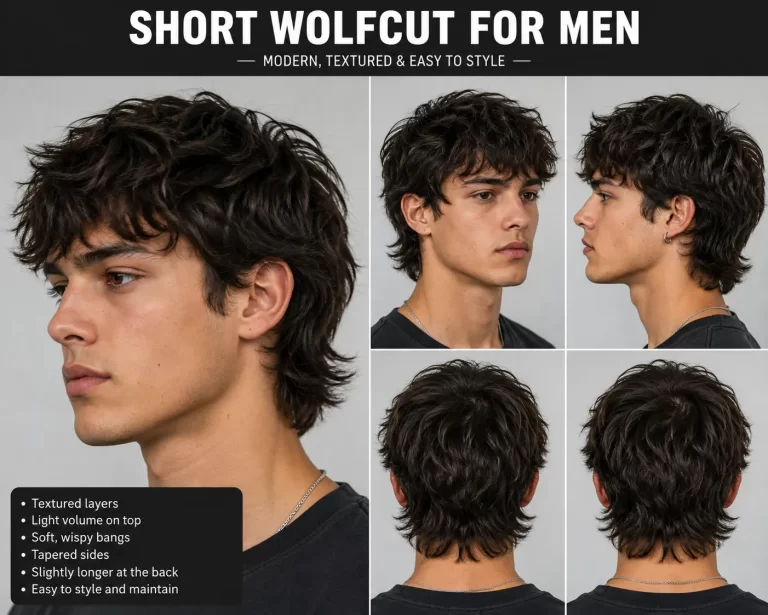
2. Short Wolfcut Mullet
A shorter take where the front and top sit around 3–4 inches and the back extends to the collar. The layers are tighter and the overall look is more controlled. Great for first-timers who want to try the style without going all-in.
3. Long Wolfcut Mullet
The dramatic version. The top and sides stay at medium length while the back extends well past the collar — sometimes to mid-back. This one has serious rockstar energy and looks best on wavy or naturally textured hair.
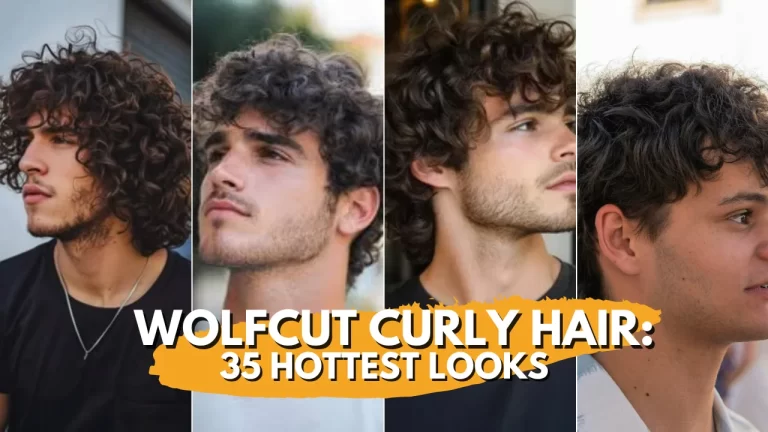
4. Curly Wolfcut Mullet
Curly hair takes the wolfcut mullet to another level. The curls pump up the crown volume and make every layer look bigger and more expressive. Always ask your barber to cut it dry — curls shrink a lot when wet, and cutting wet leads to too much length coming off.
5. Wavy Wolfcut Mullet
Wavy hair is one of the best textures for this cut. The waves move through the layers naturally, and the mullet back holds its shape without much effort. Usually a sea salt spray on damp hair is all you need.
6. Straight Hair Wolfcut Mullet
Straight hair shows every single layer clearly. That means the cut has to be very precise or the layers look choppy and disconnected. Ask for feathered ends rather than blunt cuts.
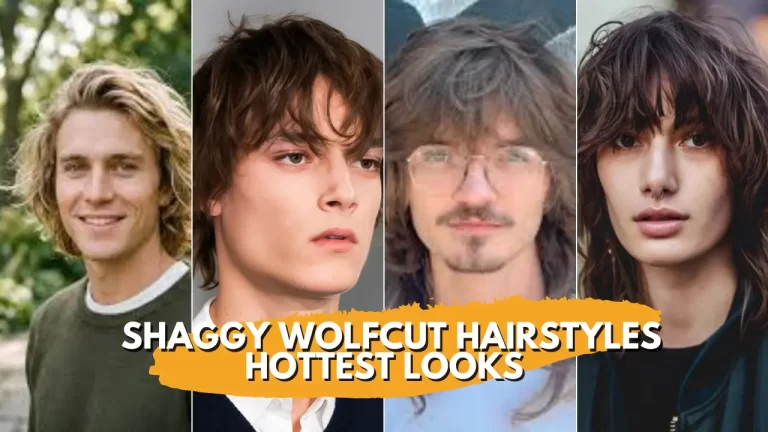
7. Shaggy Wolfcut Mullet
The shaggy version leans all the way into texture and messiness. More layers, undone ends, and a rough finish on purpose. It’s the most low-effort version to style every day, and it fits the retro-meets-modern feel of the wolfcut mullet perfectly.
8. Soft Wolfcut Mullet
The soft version uses blended layers instead of choppy ones, and the ends are feathered rather than jagged. The shape is rounder and more flowing. Good for men who want the wolfcut mullet look without the punk or grunge vibe.
9. Layered Wolfcut Mullet
This version goes big on layers — multiple tiers throughout the cut to create real depth and dimension. Best for thick hair that needs bulk removed while keeping the wolfcut mullet shape intact.
10. Textured Wolfcut Mullet
A razor or thinning shears cut the ends on this version to add lightweight texture to each layer. The cut looks airier and more natural as a result. Works well on medium-density hair that tends to look flat otherwise.
11. Messy Wolfcut Mullet
No effort, maximum personality. This is the version where you work a little matte clay or low-hold wax through your hair and call it done. Tousle the crown, push the sides out, and let the mullet back go wherever it wants.
12. Choppy Wolfcut Mullet
Choppy ends give each layer a raw, defined edge. This version looks more graphic and deliberate than the messy variation. It pairs well with bold hair colors and works especially well on straight or slightly wavy hair.
13. Fluffy Wolfcut Mullet
Build this one with a blowout and a round brush. The fluffy wolfcut mullet maxes out crown volume and creates a soft, rounded silhouette on top. The mullet back hangs naturally underneath for contrast. Popular in Korean and Japanese barbershops.
14. Edgy Wolfcut Mullet
The edgy version cranks up the contrast. Shorter, more defined layers on top, heavier and longer in the back, and sometimes an undercut or shaved detail sits underneath the mullet. This is the most aggressive variation of the style.
15. Curly Wolfcut Mullet
Curly hair takes the wolfcut mullet to another level. The curls pump up the crown volume and make every layer look bigger and more expressive. Always ask your barber to cut it dry — curls shrink a lot when wet, and cutting wet leads to too much length coming off.
15. Wolfcut Mullet with Curtain Bangs
Curtain bangs part in the center and blend right into the face-framing layers of the wolfcut mullet. The bangs add softness to the front and make the whole style feel more put-together.
16. Wolfcut Mullet with Fringe / Side Bangs
A side-swept fringe adds an asymmetric twist to the wolfcut mullet. It works well for men who want to reduce a wide forehead or add something interesting to one side of the face. The rest of the cut stays shaggy and textured.
17. Wolfcut Mullet Fade
A fade on the sides gives the wolfcut mullet a clean, barbershop-ready finish. The fade tightens the sides while the mullet back stays full and long. The contrast between the tight fade and the layered top looks sharp and very modern.
18. Low Taper Wolfcut Mullet
The low taper is subtle. It starts just above the ear and blends the sides down gently. It keeps the wolfcut mullet clean without the hard contrast of a full fade. Good for professional settings where you still want the full wolfcut mullet shape.
19. Mid Taper Wolfcut Mullet
The mid taper creates more visible structure on the sides. It starts around the temple and tapers down to the neckline. It’s the most balanced variation — structured enough to look intentional, subtle enough to stay versatile in different settings.
20. Korean Wolfcut Mullet
Korean-style wolfcut mullets focus on precise layering, soft texture, and a glossy finish. They usually feature a center part, face-framing pieces, and a back that’s long but not dramatic. The look is polished and clean — much neater than most Western versions.
21. Asian / Japanese Wolfcut Mullet
Japanese stylists bring a quieter, more angular approach to this cut. The layers are structured but understated, the silhouette is controlled, and the finish is clean rather than shaggy. Best on straight, dense Asian hair textures.
22. Wolfcut Mullet with Highlights
Highlights — especially money pieces around the face or balayage through the layers — take the wolfcut mullet from a shape cut to a full visual statement. The lighter pieces catch the light and show off the movement in every layer.
23. Wolfcut Mullet Perm
A wolfcut mullet with a beard is one of the most underrated combos in men’s grooming — and almost nobody talks about it. The volume and length of the cut balances the weight of a beard on the lower face. Medium-length and full beards work best. Keep the beard shaped so the two don’t fight each other for attention.
25. Rockstar Wolfcut Mullet
Extra-long layers, dramatic crown volume, and a mullet back that means business. This is the version for men who want the full rock-and-roll treatment. Big, bold, and completely unapologetic.
Why the Wolf Cut Went Viral (K-pop Origins + TikTok Timeline)
The wolfcut mullet didn’t come out of nowhere. Years of slow-building trends all collided to create it.
The wolf cut first gained massive attention on social media, largely driven by K-pop fans recreating the hairstyles of their favorite idols. Around the same time, the mullet was experiencing a major comeback as younger generations embraced its rebellious, retro-inspired look.
As both trends grew, barbers began blending the heavy layers of the wolf cut with the longer back section of the mullet. Korean and Japanese hairstylists were among the first to showcase the hybrid style online, and it quickly spread through TikTok, Instagram, and other social platforms.
Today, the wolfcut mullet is one of the most popular men’s hairstyles worldwide, attracting attention across North America, Europe, Asia, and beyond thanks to its mix of texture, movement, and individuality.
Wolfcut Mullet vs Regular Mullet vs Wolf Cut — What’s the Real Difference?
These three cuts share the same DNA but they live in very different places. If you’ve been trying to figure out which one you actually want, this section clears it up.
Layer Structure: How They Differ
A regular mullet is a clean, simple cut. The front and sides stay short and neat, and the back grows long. There’s not much layering — the whole point is the contrast between the short front and long back.
A wolf cut is all about layers. Multiple levels of cutting work together to build volume and texture. The crown is the heaviest, the sides are layered, and the ends are usually choppy or feathered. The front and back don’t have a big length difference.
A wolfcut mullet combines both. You get the layered, textured crown and sides of a wolf cut, but the back extends into a full mullet. The result is a style that has both structural contrast (short front, long back) and real texture throughout.
Hair Length Distribution Comparison
Crown
- Wolfcut Mullet: Full, heavily layered
- Wolf Cut: Full, heavily layered
- Regular Mullet: Shorter, cleaner
Sides
- Wolfcut Mullet: Shaggy, textured
- Wolf Cut: Shaggy, textured
- Regular Mullet: Short and tapered
Back (Nape)
- Wolfcut Mullet: Long, mullet-length
- Wolf Cut: Moderate, rounded
- Regular Mullet: Long and extended
Front / Face Frame
- Wolfcut Mullet: Medium layers
- Wolf Cut: Medium layers
- Regular Mullet: Short and structured
Overall Silhouette
- Wolfcut Mullet: Layered with an extended back
- Wolf Cut: Round and full
- Regular Mullet: Classic contrast shape
Texture Level
- Wolfcut Mullet: High
- Wolf Cut: High
- Regular Mullet: Low to medium
Key Takeaway
A wolfcut mullet combines the heavy layering and texture of a wolf cut with the longer back section of a traditional mullet. Compared to a regular mullet, it looks messier, more modern, and significantly more textured.
Texture and Styling Contrast
The regular mullet looks sleek and structured. It has a retro, deliberate feel. The wolf cut goes the opposite way — it’s intentionally undone, messy, and modern.
The wolfcut mullet lives between them but leans toward the wolf cut side. It’s textured and shaggy like a wolf cut, but the extended back pushes it into bolder, more dramatic territory.
Maintenance Differences
The regular mullet is the easiest of the three to maintain. Once you cut it, the shape holds on its own for a while and you barely need to style it daily.
The wolf cut takes more product and effort to look intentional. Skip the styling and it falls flat or uneven.
The wolfcut mullet sits in between, but it needs more daily attention than a regular mullet. The layers need product, and the back needs regular trims to stay proportional.
Wolfcut Mullet by Face Shape
Getting the wolfcut mullet right isn’t just about picking a length or texture. The shape needs to work with your face. Here’s how to fine-tune it.
Round Face
For round faces, you want to add height and cut down on width. Tell your barber to keep the crown layers tall and the sides slightly tighter. Skip wide, blunt layers at cheek level — those add horizontal volume to a face shape that’s already wide. A low or mid taper keeps everything proportional.
Oval Face
Oval faces are the most flexible. Almost every version of the wolfcut mullet — shaggy, fluffy, fade, Korean-style — works well here. Use this as a chance to experiment with length and texture without worrying much about the face shape piece. Go long, go short, go bold.
Square Face
Square jaws benefit from the natural softness of a layered cut. The shaggy, textured nature of the wolfcut mullet takes the edge off a strong jaw line on its own. Go for soft, blended layers and avoid overly choppy or angular cuts that make the squareness more obvious.
Diamond Face
Diamond-shaped faces have wide cheekbones with a narrower forehead and chin. The wolfcut mullet works great here because the crown volume adds width up top and balances the face. Keep the sides tighter with a taper or subtle fade to avoid adding even more width at the cheekbones.
Heart Face
Heart-shaped faces have a wide forehead that narrows toward the chin. The mullet’s extended back adds visual weight to the lower portion of the face, which helps balance the top-heavy shape. Curtain bangs or a center-parted fringe also softens the wide forehead nicely.
Wolfcut Mullet by Hair Type
Every hair type reacts differently to this cut. Here’s what to know before you sit down in the chair.
Thick Hair
Thick hair holds the wolfcut mullet shape better than any other type — but it gets heavy fast. Your barber should go through the mid-lengths and ends with thinning shears or a razor to remove bulk while keeping the mullet back length and the crown volume intact. Don’t let them cut the length too short just to deal with the thickness.
Fine Hair
Fine hair needs structural support to pull off the wolfcut mullet. Ask for higher, more defined layers that sit closer to the crown. They build the illusion of volume where there isn’t much. A volumizing mousse at the roots before blowdrying lifts the fine hair and gives the mullet back section enough body to hang properly rather than lying flat.
Curly Hair
Curly hair is one of the most rewarding textures for this cut — when it’s done right. The key is always a dry cut. Your barber needs to cut your curls in their natural state, not stretched and wet. Cutting wet leads to the most common curly hair mistake: too much length gone because nobody accounted for the shrinkage. The curls naturally pump up the layers and make the mullet back look full and alive.
Wavy Hair
Wavy hair moves through the layers of the wolfcut mullet in a way that looks effortless and natural. The waves bring their own texture, so you usually don’t need as much product as straight hair does. A sea salt spray on damp hair before air-drying activates the wave pattern and lets the cut do most of the work on its own.
Straight Hair
Straight hair shows every single layer and line in the wolfcut mullet. That means the cut has to be very precise — any unevenness in the layers will be easy to spot. Ask for feathered, blended ends rather than blunt cuts. Plan to use a texture spray or light clay every day to stop the layers from lying flat and losing the wolf cut shape.
How to Ask Your Barber for a Wolfcut Mullet?
This is the section nobody writes, and it might be the most useful one in the whole guide.
The Exact Words to Use
Walk in and say: “I want a wolfcut mullet — heavy layers at the crown, shaggy texture through the sides, and a proper mullet length in the back. Keep the front and sides shorter than the back, and I want the ends feathered, not blunt.”
If you want a fade or taper, add: “Can you put a [low/mid] taper on the sides to clean it up underneath?”
If you want the Korean version, say: “I want a softer, more polished version — precise layers, glossy finish, center part, not too shaggy.”
Best Reference Photos to Bring
Always bring photos. Three works best — one for the overall shape, one showing the back length you want, and one that matches your hair texture. Search “wolfcut mullet men 2026” on TikTok or Instagram and save your favorites before you go.
Common Barber Mistakes to Avoid on the Mullet Shape
Cutting the back too short. The mullet length is what separates this from a plain wolf cut. If your barber takes the back too aggressively, speak up right away.
Going too choppy with the layers. Some texture is the point, but layers that are too choppy look dated rather than modern. Ask for feathered layering if you want a cleaner result.
Skipping the face-framing pieces. These shorter front pieces are the wolf cut half of the hybrid. Without them, you end up with a textured mullet, not a wolfcut mullet.
Leaving the neckline messy. Even on a mullet, the neckline needs to be clean. Ask your barber to shape the neckline neatly even while keeping the back length long.
How to Style a Wolfcut Mullet?
The wolfcut mullet gets much easier to style once you know what each part of the cut needs.
Styling on Straight Hair
Start with damp hair. Apply a light volumizing mousse or texture spray from roots to mid-lengths. Blowdry with a round brush, lifting the crown layers upward and pushing the sides outward.
Let the mullet back hang naturally — don’t blowdry it forward or it’ll look mullet-heavy rather than balanced. Finish by working a small amount of matte clay through the ends to define the layers.
Styling on Wavy Hair
Let your hair air-dry 60–70% of the way after washing. Scrunch a sea salt spray or wave cream through the layers and the back section.
Diffuse on low heat to speed up drying without disrupting the wave pattern. Use your fingers only to shape once dry — brushing breaks up the waves.
Styling on Curly Hair
Apply curl cream generously to soaking wet hair. Work it through section by section, including the mullet back, which often gets skipped.
Air-dry fully or diffuse on low heat. Once completely dry, use your fingers to gently separate the layers and give the crown some lift. Add a light hair oil to the back ends to keep them defined and frizz-free.
Getting the Messy Wolfcut Mullet Look
This is the easiest routine in the guide. Work a small amount of matte clay or low-hold wax through damp or dry hair.
Focus on the crown and the layer ends. Tousle the crown with your fingers, push the sides slightly outward, and let the mullet back fall however it wants. The less deliberate it looks, the more it works.
Getting a Clean / Professional Wolfcut Mullet Finish
Blowdry on medium heat with a round brush at the crown and a paddle brush through the back.
Work the crown layers upward and the sides outward. Finish with a light-hold serum or glossing spray. You want defined, intentional layers — not stiff, just clean and neat.
No-Heat Daily Routine
Mist your hair with a leave-in conditioner spray or a water-based refresher. Scrunch or finger-style the layers into shape. Let it air-dry.
Work a small amount of light pomade or hair oil through the ends. Under three minutes, and your wolfcut mullet looks fresh for the day.
Best Products for a Wolfcut Mullet
Good product choices make a real difference in how the wolfcut mullet holds up — especially in keeping the wolf cut volume and the mullet back length working together.
Sea Salt Spray is the top pick for wavy and textured wolfcut mullets. Spray it onto damp hair before air-drying. It activates wave patterns, adds grip to the layers, and gives the whole cut that effortless, lived-in finish.
Texture Powder is a game-changer for fine hair. Sprinkle a small amount at the roots and work it in with your fingertips. You get immediate volume and hold, especially useful for lifting flat crown layers that fine hair tends to drop throughout the day.
Matte Clay handles the messy, everyday wolfcut mullet. It adds separation, definition, and hold without any shine or stiffness. Use it on damp or dry hair and rework it throughout the day if needed.
Curl Cream is non-negotiable for curly hair. Apply generously to wet hair and leave it alone while it dries. It defines the curl pattern, cuts frizz through all the layers, and stops the mullet back from going puffy.
Volumizing Mousse is especially helpful for the mullet back section on fine or straight hair. The back needs body to hang properly. Without support, it goes flat and loses the mullet silhouette. Work mousse from mid-lengths to ends and blowdry the back section downward to lock it in.
How to Maintain a Wolfcut Mullet?
Trim Schedule
Book a trim every 4–6 weeks. The wolfcut mullet depends on balanced proportions between the layered top and the long back. When the layers grow out unevenly, or the back outgrows the top, the shape disappears. A quick trim resets everything without removing much length.
Washing and Conditioning Routine
Wash two to three times a week. Over-washing strips the natural oils that help the layers move well and keep the ends from drying out. Apply moisturizing conditioner from mid-lengths to ends only — putting conditioner on the scalp weighs the roots down and flattens the wolf cut volume.
Keeping the Mullet Shape as Layers Grow Out
Between trims, use styling to maintain the shape. Keep the crown layers lifted with product and work the sides outward so they don’t collapse inward as they grow. The mullet back can mostly look after itself — the top layers need the most attention during the grow-out phase.
How to Grow Out a Wolfcut Mullet Gracefully?
Most guides skip this part completely. Here’s what actually happens: the wolfcut mullet grows into an in-between phase where the layers lose definition but the back is still long.
The best move is to lean into it. Keep the back trimmed to your collar so it doesn’t look neglected, but let the top and sides grow out. Once the top reaches chin level or longer, you have enough to shift into a full wolf cut, a long shag, or a different long layered style.
If you want to go shorter, ask your barber to bring the back up to match the sides gradually rather than cutting everything off at once. Moving through the transition step by step beats starting over completely.
Pros and Cons of a Wolfcut Mullet
Advantages Over a Standard Mullet
The wolf cut’s layering makes the wolfcut mullet way more versatile than a traditional mullet. A standard mullet can feel one-dimensional or costumey. The added texture and crown volume from the wolf cut pushes the hybrid into modern, dynamic territory.
It also styles better every day. The layers give you something to work with in the morning — a standard mullet mostly just lies flat with nothing to style except the back length.
Advantages Over a Plain Wolf Cut
The mullet’s extended back adds something a plain wolf cut doesn’t have. It creates a real silhouette contrast that makes the style more dramatic and memorable. If you’ve had a wolf cut and felt like it was missing something — the wolfcut mullet is probably the answer.
It’s also a bolder choice. The wolf cut is trendy but fairly safe. The wolfcut mullet is more committed and personality-forward — it tells people something about you before you even say a word.
Drawbacks to Consider
The wolfcut mullet needs regular maintenance. The layers and the back length have to stay proportional or the cut looks overgrown and shapeless rather than intentionally textured.
It also doesn’t work in every professional setting. While the low taper versions can push toward business-appropriate, the wolfcut mullet at its core is a casual, expressive style. Know where you’re wearing it.
Who Should Avoid It
Men with very short hair — under 3 inches on top — don’t have enough length to build the wolf cut layers or the mullet back. Men who want a clean, low-effort cut with no daily styling will probably find the wolfcut mullet more work than it’s worth. And anyone in a very conservative work environment might want to save this one for the weekend.
FAQs
Conclusion
The wolfcut mullet is one of the most exciting men’s hairstyles right now — and it earns that title. It takes two styles with serious personality and builds something that works better than either one on its own.
It suits nearly every hair type. It adjusts to different face shapes with simple tweaks. It can go full rockstar or clean and Korean-polished depending on what you want. And unlike a lot of trendy cuts, it gives you real styling options every single day once you figure out your routine.
The key to nailing it is talking clearly with your barber. Bring photos, use the script in this guide, and tell them exactly which version of the wolfcut mullet you want. That one conversation separates a great result from a generic shag.
If you’ve been thinking about a more expressive haircut, the wolfcut mullet is the one worth trying. It’s bold, it’s modern, and it genuinely turns heads in all the right ways