Wolfcut Wavy Hair: Best Styles & Tips for Men
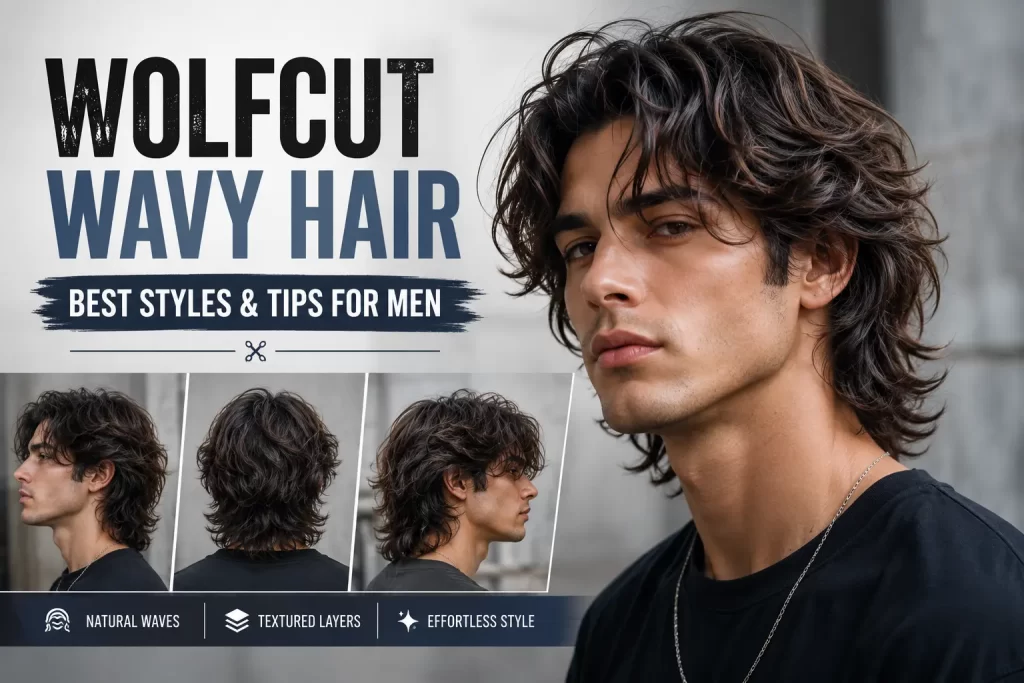
If you have wavy hair and you keep seeing the wolfcut everywhere, you are not imagining it. This cut and wavy hair go together like peanut butter and jelly.
A wolfcut wavy hair combo works so well because your natural wave already does half the job. The cut just gives it somewhere to go.
In this guide, we will cover everything. What wave patterns work best. How to style it. How to keep it from frizzing out. And how to keep it looking sharp between trims.
Let’s get into it.
Is a Wolfcut Good for Wavy Hair?
Short answer? Yes. Wavy hair might be one of the best textures for this cut, right up there with curly hair.
Here is why. A wolfcut removes weight from your hair through layers. Wavy hair carries a lot of natural bend and movement, but when it grows out, it can get heavy and flat. The layers lift that weight off, and your waves get room to bounce again.
Does a Wolfcut Work on Naturally Wavy Hair?
Yes, and it actually works better than on pin-straight hair in some ways. Straight hair needs help to build texture. Wavy hair already has texture built in. The cut just shapes it.
Does a Wolfcut Add Volume to Wavy Hair?
It does. Short layers at the crown lift the roots. Longer layers underneath let the waves fall and move. That combo is what gives a wavy wolfcut its full, lived-in look.
Wolfcut Length Guide for Wavy Hair
Wavy hair looks great at almost any wolfcut length. But short, medium, and long each bring something a little different.
Short Wolfcut Wavy Hair
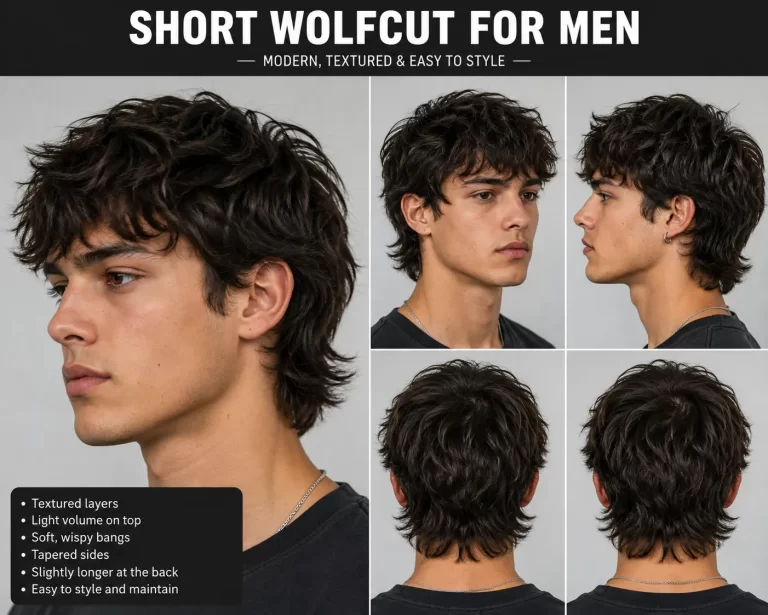
A short wolfcut on wavy hair is low effort and high reward. The waves add natural texture, so you barely need any product to make it look styled. It also dries fast, which is a nice bonus.
Long Wolfcut Wavy Hair
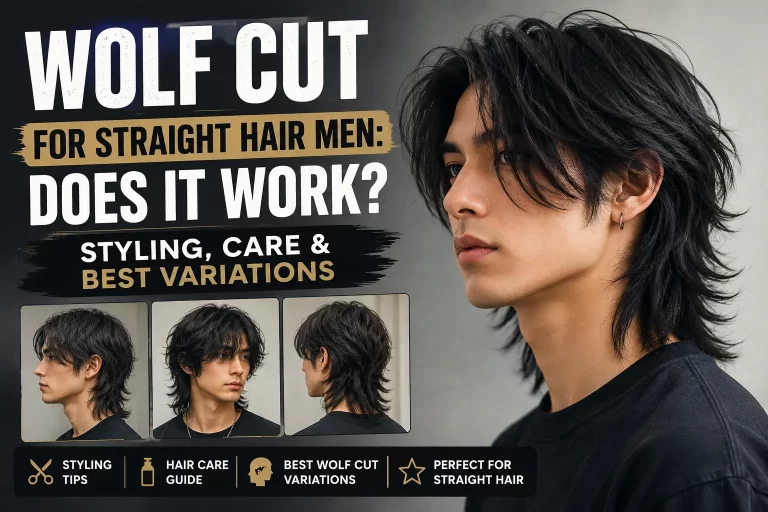
A long wolfcut lets your waves really show off. The layers stop the hair from looking like one heavy curtain, so the wave pattern gets to move through the whole length instead of just sitting flat.
How Long Should Your Hair Be Before Getting a Wolfcut?
You need at least chin length to get the full wolfcut shape. Shoulder length and longer give you the most dramatic layering, but even chin-length wavy hair can carry a lighter version of the cut just fine.
Wolfcut Wavy Hair Men: Best Style Directions to Try
If you are searching for wolfcut wavy hair men styles, here are a few directions worth exploring, each one built around your wave pattern.
Wolfcut with a Mullet Back. Wavy hair moves beautifully through a mullet-style back section. If you want more detail on this combo, check out our full guide to the wolfcut mullet, which includes a section built just for wavy textures.
Shaggy Wolfcut on Waves. This version leans into loose, undone texture. It is one of the lowest-effort ways to wear a wolfcut. Our shaggy wolfcut guide breaks down the wavy-specific version in more depth.
Classic Layered Wolfcut. This is the standard wolfcut shape, just tailored to a wavy texture.
Face Shape and Bangs: Quick Notes
Wolf cuts flatter oval, heart, and square face shapes the easiest, since the layers add balance around the jaw and cheekbones.
As for bangs, curtain bangs are the most popular pairing with wavy hair. The natural wave gives them soft movement without much styling work. Want the full bang breakdown? Head over to our wolf cut with bangs guide.
Wolfcut for Every Wave Pattern: 2A, 2B, and 2C Wavy Hair
Not all wavy hair is the same. Hairstylists usually sort waves into three types: 2A, 2B, and 2C. Knowing yours helps your barber cut the right amount of layering.
Is a Wolfcut Suitable for 2A, 2B, or 2C Wavy Hair?
Yes, all three types can wear a wolfcut. Here is a quick breakdown.
2A hair has a loose, subtle bend. It is closer to straight than curly. A wolfcut on 2A hair usually needs a bit of product to bring out the wave, since the pattern is naturally light.
2B hair has more defined S-shaped waves. This is the sweet spot for a wolfcut. The layers and the wave pattern work together with very little effort.
2C hair has the strongest wave pattern, almost bordering on curly. A wolfcut on 2C hair can look incredibly full and textured, since the tighter wave adds so much natural movement to every layer.
Can Fine Wavy Hair Pull Off a Wolfcut?
Yes. Fine wavy hair actually benefits a lot from this cut. The short layers at the top lift the hair away from the scalp, which makes it look thicker than it is. Just ask your barber to go easy on thinning shears, since fine hair can look sparse if too much gets removed.
Can You Get a Wolfcut With Thick Wavy Hair?
Definitely. Thick wavy hair holds a wolfcut’s shape really well. The main goal here is removing bulk, not adding volume.
Can a Wolfcut Reduce Bulk in Thick Wavy Hair?
Yes, this is one of the cut’s biggest strengths. Heavy layering through the mid-lengths takes out the weight that makes thick wavy hair feel like a helmet. Once that bulk is gone, your waves can actually move and clump together the way they are supposed to.
How to Style a Wolfcut on Wavy Hair
Here is a simple routine that works for most wavy wolfcuts, no fancy tools needed.
- Wash your hair and let it towel dry until it is about 70 percent dry.
- Spray in a sea salt spray or a lightweight wave cream.
- Scrunch your hair upward, from the ends toward the roots.
- Flip your head forward and give it a light diffuse on low heat, or just let it finish air drying.
- Once dry, use your fingers to separate the layers. Skip the brush completely.
That’s it. Five steps and you are done.
How to Style a Wolfcut Without Heat on Wavy Hair
Skip the diffuser and just air dry after step three above. It takes longer, but your waves will look more natural and less crunchy. This is the easiest routine if you are always short on time in the morning.
Can You Air-Dry a Wolfcut If You Have Wavy Hair?
Yes, and honestly, it is often the best option. Wavy hair usually looks its best when it is allowed to dry on its own. Heat tools can loosen the wave pattern if you overdo it.
How to Stop a Wavy Wolfcut From Frizzing
Frizz happens when the hair cuticle gets rough, usually from towel rubbing or brushing dry hair. A wolfcut can actually help fight frizz once you know the trick.
The choppy, layered ends on a wavy wolfcut let each section of hair clump together instead of spreading out. That clumping is what keeps frizz down.
To help even more, swap your regular towel for a microfiber towel or an old cotton t-shirt after washing. Squeeze gently, do not rub. This one small change makes a big difference.
Wolfcut Maintenance for Wavy Hair
A wolfcut is not totally hands-off, but it is far from high maintenance once you get the hang of it.
How Often Should You Trim a Wavy Wolfcut?
Plan on a trim every six to eight weeks. Wavy hair hides growth pretty well, so you have a little more wiggle room than someone with straight hair, but the layers still need refreshing to keep their shape.
Can You Sleep With a Wolfcut and Keep the Waves Intact?
Yes, with one easy trick. Before bed, gather your hair loosely on top of your head into a soft, low ponytail or a loose pineapple style. Use a soft scrunchie, not a tight elastic. This keeps your waves from getting smashed flat while you sleep, so you wake up with more shape already in place.
Can You Tie Up a Wavy Wolfcut?
Yes. Because of the layers, a wolfcut will always have some shorter pieces falling out around your face, even when tied back. Some guys love that look. Use a soft fabric tie to avoid creasing or breaking the shorter layers.
Wolfcut vs Shag for Wavy Hair
Quick version: a wolfcut piles most of its volume at the crown, while a shag spreads its texture more evenly through the whole head. Both work well on wavy hair, but the wolfcut gives you more height and drama on top.
How to Ask Your Barber for a Wavy Wolfcut?
Clear communication saves you from a bad haircut day. Try saying something like this:
“I have wavy hair and I want a wolfcut. Please keep the crown layers short for lift, and cut the ends so they work with my natural wave instead of fighting it.”
Bringing a photo helps too, especially one of someone with a similar wave pattern to yours.
Frequently Asked Questions
Is a wolfcut good for wavy hair?
Yes. Wavy hair is one of the best textures for this cut. The layers remove weight and let your natural wave pattern move freely.
Is a wolfcut low maintenance for wavy hair?
For the most part, yes. Daily styling takes just a few minutes, though you will want a trim every six to eight weeks to keep the shape sharp.
Does a wolfcut make wavy hair look frizzy?
Not if it’s cut and styled the right way. The layers actually help waves clump together, which cuts down on frizz rather than causing it.
Are bangs necessary for a wavy wolfcut?
No, bangs are optional. Plenty of wavy wolfcuts look great with no bangs at all, letting the layers and volume take center stage.
How much does a wolfcut typically cost?
Prices vary a lot depending on where you go. Budget barbershops usually charge around 30 to 40 dollars, while premium salons can run 60 to 90 dollars or more, especially in bigger cities.
Can men with wavy hair get a wolfcut?
Absolutely. Wavy hair is one of the most requested textures for this cut right now, and it is a great starting point if you are new to layered styles.
Conclusion
A wolfcut and wavy hair are a natural match. The layers give your waves room to move, add volume where you need it, and cut down on bulk if your hair runs thick.
Whether you go short or long, with bangs or without, this cut adapts to your wave pattern instead of fighting it. That is exactly why it has stayed so popular heading into 2026.
If you are on the fence, talk to your barber, bring a photo, and be clear about your hair type. Once you try a wolfcut on wavy hair, it is hard to imagine going back to anything else.